
Views: 0 Author: Site Editor Publish Time: 2025-12-16 Origin: Site
Your office chair is more than just a place to sit; it is the command center of your workday. Yet, most people ignore the most critical component until it breaks: the base. The stability, mobility, and overall lifespan of your seating depend entirely on the quality of the chair base with wheels.
When your chair starts to wobble, or the casters refuse to glide across the floor, it disrupts your focus. You might think you need to buy an entirely new chair, but often, a replacement base is all that is required to restore functionality. Whether you are looking to repair a broken unit or upgrade a standard office chair for better durability, understanding the mechanics of the base is essential.
This guide explores everything you need to know about selecting the right components, the differences in materials, and why investing in quality hardware from manufacturers like ZhunXing Hardware can save you money in the long run.
A standard office chair relies on a five-star base for stability. While older or purely aesthetic chairs might use four legs, the five-point system is the industry standard for safety. It prevents the chair from tipping over when you lean back or roll across the room.
The "chair base with wheels" assembly consists of two main parts: the spider base (the central hub and legs) and the casters (the wheels). These two components must work in harmony. If the base is weak, it can crack under pressure. If the wheels are low quality, they can damage your flooring.
Micro-movements are crucial for ergonomics. Being able to scoot closer to your monitor, roll over to a filing cabinet, or simply rotate freely helps reduce strain on your back and neck. A high-quality chair base with wheels ensures these movements are fluid and effortless. When the mechanism creates friction, your body compensates by straining muscles, leading to fatigue.
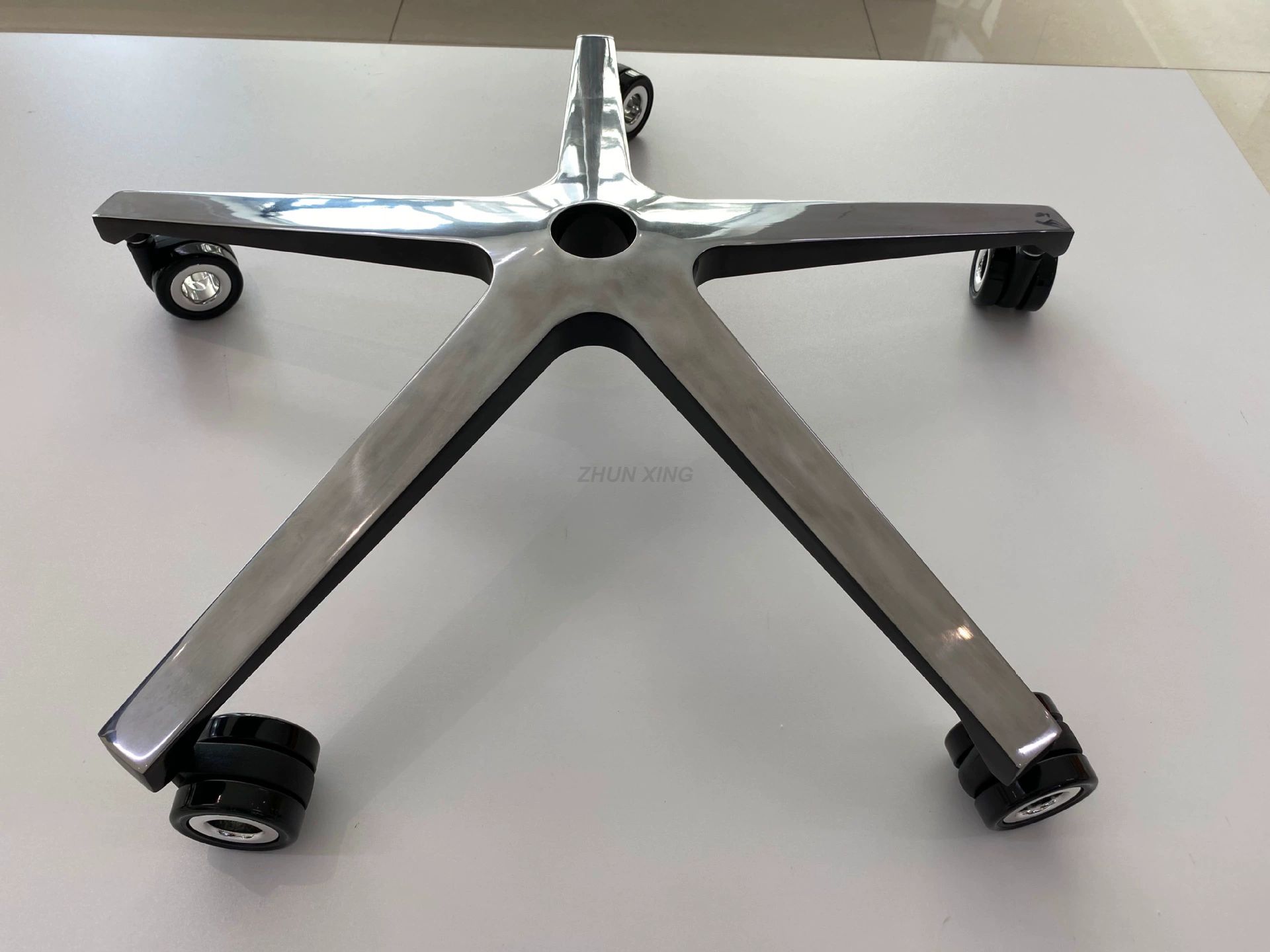
When shopping for a replacement base, you will generally encounter two main categories of materials: reinforced nylon (plastic) and metal (aluminum or steel). The choice often comes down to budget, aesthetics, and required weight capacity.
These are standard on most entry-level to mid-range office chairs. Modern engineering has made nylon bases surprisingly distinct from the cheap plastics of the past. They are internally ribbed for strength and can support a significant amount of weight. However, they can become brittle over time, especially in environments with fluctuating temperatures or heavy sunlight exposure.
For heavy-duty use or a more premium look, metal is the superior choice. Polished aluminum offers a sleek, chrome-like finish that resists rust and wear. Steel bases are incredibly durable and often used in industrial settings.
Companies like ZhunXing Hardware specialize in creating robust metal components that outperform standard plastic alternatives. Upgrading to a metal base immediately increases the weight capacity of the chair and provides a solid, grounded feel that plastic often lacks.
Feature | Reinforced Nylon | Aluminum/Steel |
Durability | Moderate. Good for standard daily use. | High. Resistant to cracks and wear. |
Weight Capacity | Typically up to 250 lbs (113 kg). | Often exceeds 400 lbs (181 kg). |
Aesthetics | Matte black, standard office look. | Polished, chrome, or brushed finish. Premium look. |
Cost | Budget-friendly. | Higher investment. |
Maintenance | Low, but prone to scratches. | Wipes clean, very resistant to damage. |
The "wheels" part of the chair base with wheels is just as important as the spider base itself. The type of caster you choose should be dictated by the flooring in your workspace. Using the wrong wheel can result in scratched hardwood or a chair that refuses to budge on carpet.
If your office has hardwood, tile, laminate, or concrete floors, you need soft casters. These are typically made of polyurethane or soft rubber. They provide traction without marking the floor and are generally quieter.
For carpeted offices, hard nylon or plastic wheels are preferable. The harder material cuts through the pile of the carpet, allowing the chair to roll smoothly. Soft wheels on carpet will create too much friction, making it difficult to move.
Most chair bases use a universal stem size (11mm x 22mm) for the wheels. This standardized sizing makes it easy to swap out casters without changing the entire base. However, it is always wise to double-check measurements before purchasing.
You don't always need a catastrophic failure to justify a replacement. Here are a few signs it is time to upgrade your chair base with wheels:
1. Visible Cracks: Flip your chair over. If you see hairline cracks in the hub where the gas cylinder sits, or along the legs, replace it immediately. A collapse can cause serious injury.
2. Wobbly Cylinder: If the gas lift cylinder drags on the floor or wobbles inside the hub, the center hole of the base may have worn out or stretched.
3. Stuck Wheels: If changing the casters doesn't fix mobility issues, the socket housing the wheel stem might be damaged.
4. Aesthetic Upgrade: sometimes, the chair is fine, but the scuffed black plastic looks tired. Swapping it for a ZhunXing Hardware chrome base can make an old chair look brand new.
Replacing a chair base is a manageable DIY project that requires minimal tools.
1. Remove the Wheels: Pull the old wheels out of the base. They usually pop out with a firm tug.
2. Detach the Base: This is the hardest part. The gas cylinder is friction-fitted into the base. Turn the chair on its side. Use a rubber mallet to strike the base away from the cylinder. If it is stubborn, apply some penetrating oil and let it sit before hammering.
3. Prepare the New Base: Take your new chair base with wheels. Insert the new casters into the sockets until they click.
4. Reassemble: Place the new base on the floor. Lift the chair seat (with the cylinder attached) and guide the cylinder into the center hole of the new base.
5. Seat the Cylinder: Carefully sit on the chair. Your body weight will press the cylinder into the tapered hole, securing it in place.
The market is flooded with generic parts, but quality varies drastically. When sourcing components, especially for heavy-duty or commercial applications, the manufacturing process matters.
ZhunXing Hardware has established a reputation for precision engineering. Their focus on high-grade materials ensures that the chair base doesn't just look good on day one but maintains its structural integrity after years of rolling, spinning, and sitting. Opting for a reputable brand minimizes the risk of early failure and ensures compatibility with standard gas lifts and casters.
While many are similar, they are not identical. Standard bases usually have a diameter between 25 and 28 inches. A larger diameter offers more stability, which is preferable for reclining chairs. The center hole for the gas cylinder is almost always a standard 2-inch (50mm) tapered fit, but it is worth measuring to be sure.
Yes, as long as the stem size matches (usually 11mm). However, upgrading the wheels won't increase the weight capacity of the base itself. If you need a higher weight limit, you must upgrade the spider base to metal.
If your floor is slightly uneven or you prefer stability, you can purchase "locking casters" or "glides." Glides are stationary feet that replace the wheels, turning a rolling chair into a stationary one.
The foundation of your comfort lies in the hardware. A sturdy, smooth-rolling chair base with wheels improves your posture, protects your floors, and extends the life of your office chair. Whether you are replacing a broken part or upgrading for better aesthetics, prioritize quality materials.
By choosing robust components from trusted sources like ZhunXing Hardware, you ensure that your office chair remains a supportive partner in your daily work, rather than a source of frustration. Don't let a wobbly base distract you from your goals—upgrade your stability today.


